
By Calla Hindle- July 22, 2026
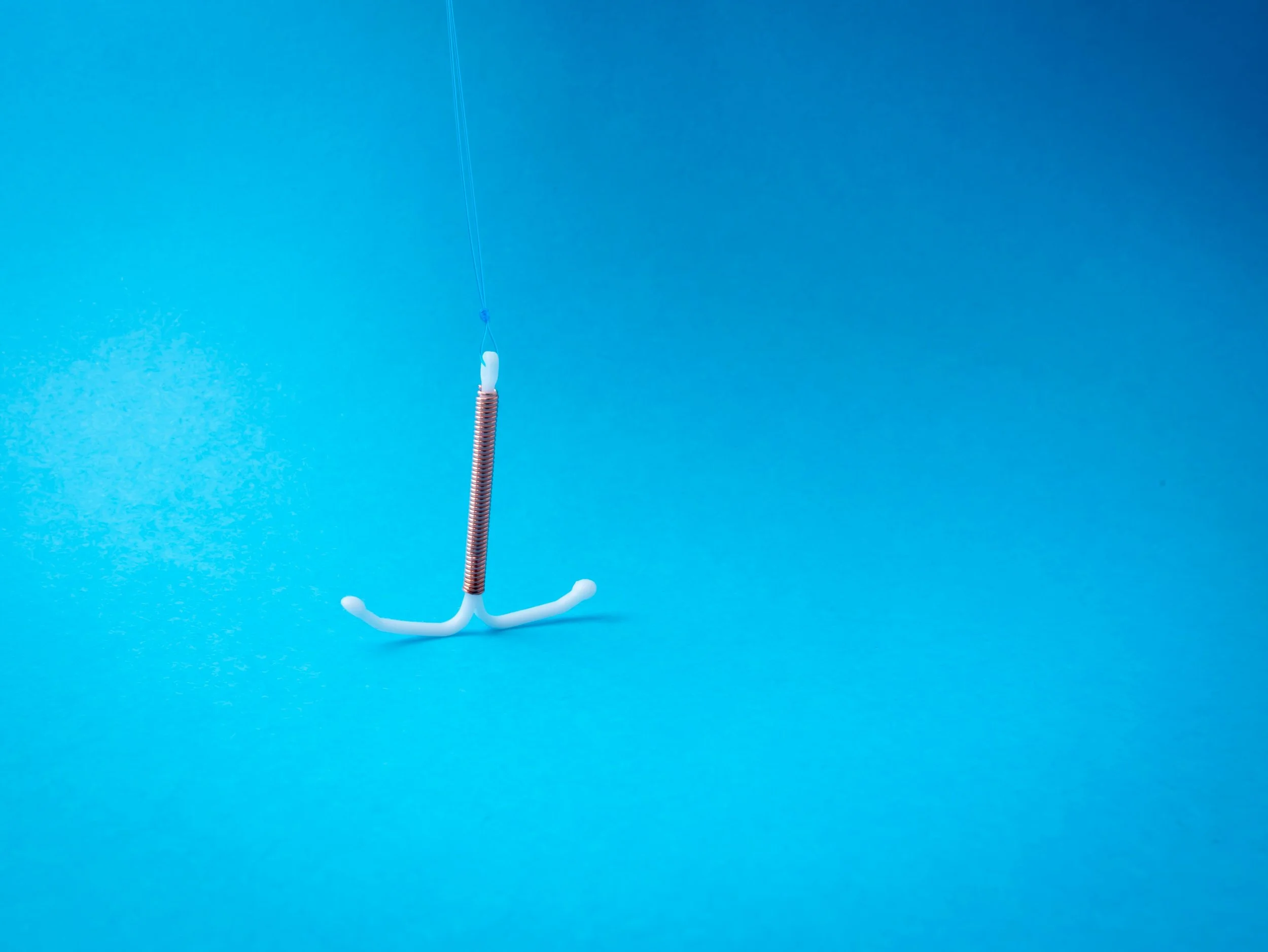
An intrauterine device (IUD) is a small, T-shaped device that is placed inside the uterus.[1] The IUD prevents pregnancy by stopping the egg and sperm from meeting and by creating a hostile environment for both the sperm and fertilized embryos. IUDs are a form of long-acting contraception that can last up to 12 years and are more than 99.1% effective in preventing pregnancy. There are several brands of copper IUDs, including Mona Lisa®, Liberté®, Flexi-T®, SMB®, and ParaGard®.
How the Copper IUD Works
Copper IUDs have a copper wire wrapped around them that releases copper ions locally within the uterus. They prevents pregnancy by creating an environment that makes it difficult for sperm to reach and fertilize an egg and by altering the uterine environment so that it is inhospitable to fertilized embryos. When an IUD is inserted, the body recognizes it as a foreign object and triggers a local immune response, causing uterine inflammation that is hostile to sperm.[2]
Copper and Sperm Function
While copper is essential in small amounts, excess copper can be toxic, particularly to the male reproductive system. Elevated copper levels may impair fertility by inducing oxidative stress, damaging sperm cells, and reducing sperm quality.[3]
The copper IUD exploits this toxic effect. The copper ions released from the IUD create a hostile uterine environment that prevents sperm from reaching and fertilizing an egg. In this way, copper functions as a long-term spermicide by impairing sperm mobility, altering cellular structure, and reducing sperm’s ability to fertilize an egg.
Inflamed Uterine Environment
Another way copper IUDs prevent pregnancy is by triggering a chronic, low-level inflammatory response in the uterus. Because the IUD is recognized as a foreign object, it activates the immune system, leading to inflammation that makes the uterine environment more hostile.[4] Unlike hormonal IUDs, the inflammatory response is not caused only by the presence of a foreign object but also by the release of copper ions. White blood cells released during this immune response gather around the IUD and can attack sperm and embryos. This immune reaction can influence the entire female reproductive tract and may disrupt communication between the uterus and the ovaries.[5] Inflammation can even extend to vaginal tissue.[6]
Increased inflammation within the uterine tissue also increases blood vessel activity in the endometrium and triggers the release of enzymes that promote clot dissolution. This helps explain why periods can be up to 55% heavier[7] and may last up to 15 days, particularly in the first 6 months after insertion.[8]
Because copper IUDS do not prevent ovulation, an egg is available each month for fertilization. If fertilization occurs, the hostile uterine environment maintained by the copper ions may prevent implantation, so the embryo cannot survive.
Risks Associated With Copper IUDs
This IUD does not protect you from sexually transmitted infections (STIs) or human immunodeficiency virus (HIV).
Insertion can be painful: The American College of Obstetricians and Gynecologists' new guidelines urge doctors to take pain seriously and offer anesthetic spray, topical numbing cream, or a paracervical block.[9]
Heavy periods and cramping: [A1] Cramping is common after insertion as the body naturally tries to expel the IUD, and period cramps may become more severe because the copper ions increase the amount of prostaglandins in the uterus.
Increased risk of infection: Chronic inflammation can weaken the body’s immune response to pathogens. This can lead to more frequent yeast infections and bacterial infections.[10]
Microbiome and bacterial vaginosis: Copper ions are toxic to beneficial lactobacilli. Copper IUDs can disrupt the vaginal microbiome and are associated with a significantly higher risk of bacterial vaginosis (BV), with nearly half of users developing BV within 6 months of insertion.[11] BV increases the risk of sexually transmitted infections and has been associated with adverse reproductive outcomes, including pelvic inflammatory disease and adverse birth outcomes.[12]
Copper toxicity: The copper IUD may contribute to increased copper exposure; however, research to date has not found conclusive evidence of copper toxicity in animal studies. Of the human studies reviewed, 8 found no increase in total copper levels among copper IUD users, while 4 reported a significant increase. While no large-scale studies have confirmed copper toxicity as a side effect of the copper IUD use, women with preexisting conditions such as Wilson’s disease, liver disease, hepatitis, anemia, thyroid disorders, leukemia, lymphoma, and rheumatoid arthritis may be at a higher risk. Anecdotal reports of mild to severe mood-related and physical symptoms attributed to copper toxicity have been reported among copper IUD users. Symptoms of copper toxicity may include the following:[13]
● Headaches and migraines
● Fever
● Passing out
● Vomiting blood
● Diarrhea
● Bloody stools
● Abdominal cramps
● Brown ring-shaped markings in your eyes
● Jaundice
● Anxiety
● Lack of concentration
● Depression
● Sudden mood changes
One woman described her physical and emotional side effects in a Facebook post:
“These are most of the symptoms I had before getting the IUD removed…I just want people to be aware that heavy metal toxicity is real and what to watch for. This is something your doctor will not tell you about. Fatigue and exhaustion; hypothyroid; brain fog; headaches; migraines; mood swings; cold hands/feet; depression; dry skin; constipation; racing/pounding heart; concentration and memory problems; spaciness; overeating; high anxiety; PMS; bloating. I’ve lost so much hair, it just fell out in globs. Also developed pulmonary hypertension, which is rare and can be caused by excess copper in the blood, while having the IUD.”[14]
Ectopic pregnancy: If pregnancy occurs while an IUD is in place, it is more likely to be ectopic, meaning that it develops outside the uterus.[15] An ectopic pregnancy is a serious medical condition that requires immediate medical attention.
Uterine perforation: The IUD may also perforate (create a hole in) the uterus.[16] If this occurs, the device can move outside the uterus and cause scarring, infection, or damage to other organs. Surgical removal is often required.
Fragmentation: U.S Food and Drug Administration (FDA) data show that breakage is more common with copper IUDs than with hormonal IUDs, occurring in 9.6% of copper IUD users.[17] The breaking, shedding, or disintegration of parts of a copper IUD can occur during removal or while the device remains in the uterus. In some cases, copper fragments may remain in the body. This breakage may result from gradual oxidation and corrosion of the copper wire, as well as repeated stress from uterine contractions.[18] Fragmentation can lead to complications, including the migration of fragments to the uterine wall, abdominal cavity, or nearby organs. These complications may require surgery and, in severe cases, a hysterectomy.[19]
For more information, read about women’s experiences with IUDs.
Is the Copper IUD Abortifacient?
An abortifacient is a drug or device that causes an early abortion by preventing the implantation of a fertilized egg in the uterus. Copper IUDs do not prevent ovulation, meaning that an egg is available for fertilization during each cycle by any sperm that survives the hostile uterine environment. Copper IUDs are abortifacient, meaning they can, according to their manufacturers, copper IUDs may prevent the implantation of a fertilized egg in the uterine lining in the wall of the uterus. Because implantation is necessary for a pregnancy to continue, some individuals consider methods that prevent implantation to be abortificant.
At fertilization, a “human being emerges as a whole, genetically distinct, individuated zygotic living human organism, a member of the species." At this stage, the embryo possesses a unique genetic profile that includes characteristics such as eye color, hair color, and gender.[20]
If the use of abortifacients goes against your moral beliefs or makes you uncomfortable, it is strongly encouraged to find alternative methods. For more information on birth control and fertility awareness, visit naturalwomanhood.org
[1]MyHealth Alberta. (n.d.). Intrauterine device (IUD) insertion .https://myhealth.alberta.ca/Health/pages/conditions. Hence,.aspx?hwid=hw7563
[2]Cleveland Clinic. (2022, November 13). Intrauterine device (IUD): Birth control, use & side effects. https://my.clevelandclinic.org/health/treatments/24441‑intrauterine‑device‑iud.
[3]Zhou, Z., et al. (2025). Excess copper exposure and male reproductive toxicity: Molecular mechanisms and potential interventions. BioMetals, 38(6), 1685–1705. https://doi.org/10.1007/s10534-025-00742-1.
[4]Chang, D. (2019, October 12). Intrauterine devices (IUDs): Mechanism of action. Calgary Guide. https://calgaryguide.ucalgary.ca/intrauterine-devices-iuds-mechanism-of-action/iuds-mechanism-of-action/
[5]Ortiz, M. E., Croxatto, H. B., & Bardin, C. W. (1996). Mechanisms of action of intrauterine devices. Obstetrical & Gynecological Survey, 51(12 Suppl.), S42–S51. https://doi.org/10.1097/00006254-199612000-00014.
[6]Ortiz, M. E., & Croxatto, H. B. (2003). Local tissue effects of copper-containing intrauterine devices. Fertility and Sterility, 79(3), 581–590. https://doi.org/10.1016/S0015-0282(03)01171-3
[7]U.S. National Library of Medicine. (2012). Study about patients using copper intrauterine device (NCT01541241). ClinicalTrials.gov. https://clinicaltrials.gov/study/NCT01541241
[8]Fibroid Fighters Foundation. (n.d.). Why does a copper IUD cause heavier periods? Fibroid Fighters.https://www.fibroidfighters.org/blog/why-does-a-copper-iud-cause-heavier-periods/
[9]Gupta, A. H. (2025, May 15). New guidelines call on doctors to take IUD insertion pain seriously. The New York Times. https://www.nytimes.com/2025/05/15/well/live/guidelines-iud-insertion-pain-management.html
[10]Mueller, A. (n.d.). The impact of IUDs on your uterus: What every woman should know. Core Recovery Method. https://www.corerecoverymethod.com/blog/how-iuds-affect-uterus
[11]Achilles, S. L., et al. (2018). Impact of contraceptive initiation on vaginal microbiota. American Journal of Obstetrics and Gynecology, 218, 622.e621–622.e610.
[12]Brown, B. P., et al. (2023). Copper intrauterine device increases vaginal concentrations of inflammatory anaerobes and depletes lactobacilli compared to hormonal options in a randomized trial. Nature Communications, 14, 499. https://doi.org/10.1038/s41467‑023‑36002‑4.
[13]Jewell, T. (2019, March 8). Copper toxicity: Signs, causes, treatment, & the IUD. Healthline. https://www.healthline.com/health/copper-toxicity#symptoms.
[14]Taylor, K. (2023, March 21). Why the copper IUD is not the natural birth control you’ve been looking for. Natural Womanhood. https://naturalwomanhood.org/is‑copper‑iud‑toxic‑painful‑cause‑hormone‑imbalance‑side‑effects‑thyroid‑natural‑birth‑control‑08112018/
[15]Bayer Inc. (n.d.). MIRENA® (levonorgestrel‑releasing intrauterine system) Product Monograph. Bayer Inc.
[16]Health. (2023, February 8). How does IUD insertion work? Health. https://www.health.com/iud-insertion-7094892
[17]Latack, K. R., & Nguyen, B. T. (2023). Trends in copper versus hormonal intrauterine device breakage reporting within the United States Food and Drug Administration adverse event reporting system. Contraception, 118, 109909. https://www.sciencedirect.com/science/article/abs/pii/S0010782422004206
[18]Mamah, J., Dube, T., Aramabi, E., Unwaha, E., & Dagba, M. (2024). Fragmentation of an in-date copper intrauterine device: An unusual complication. Cureus, 16(11), e73344. https://doi.org/10.7759/cureus.73344
[19]Fadl, H., & El-Mazny, M. I. A. (2021). Missing fragment of an intrauterine device: A case report. Case Reports in Obstetrics and Gynecology, 2021, 1–4. https://doi.org/10.1155/2021/6619935
[20]American College of Pediatricians. (2017, March). When human life begins. https://acpeds.org/position-statements/when-human-life-begins