
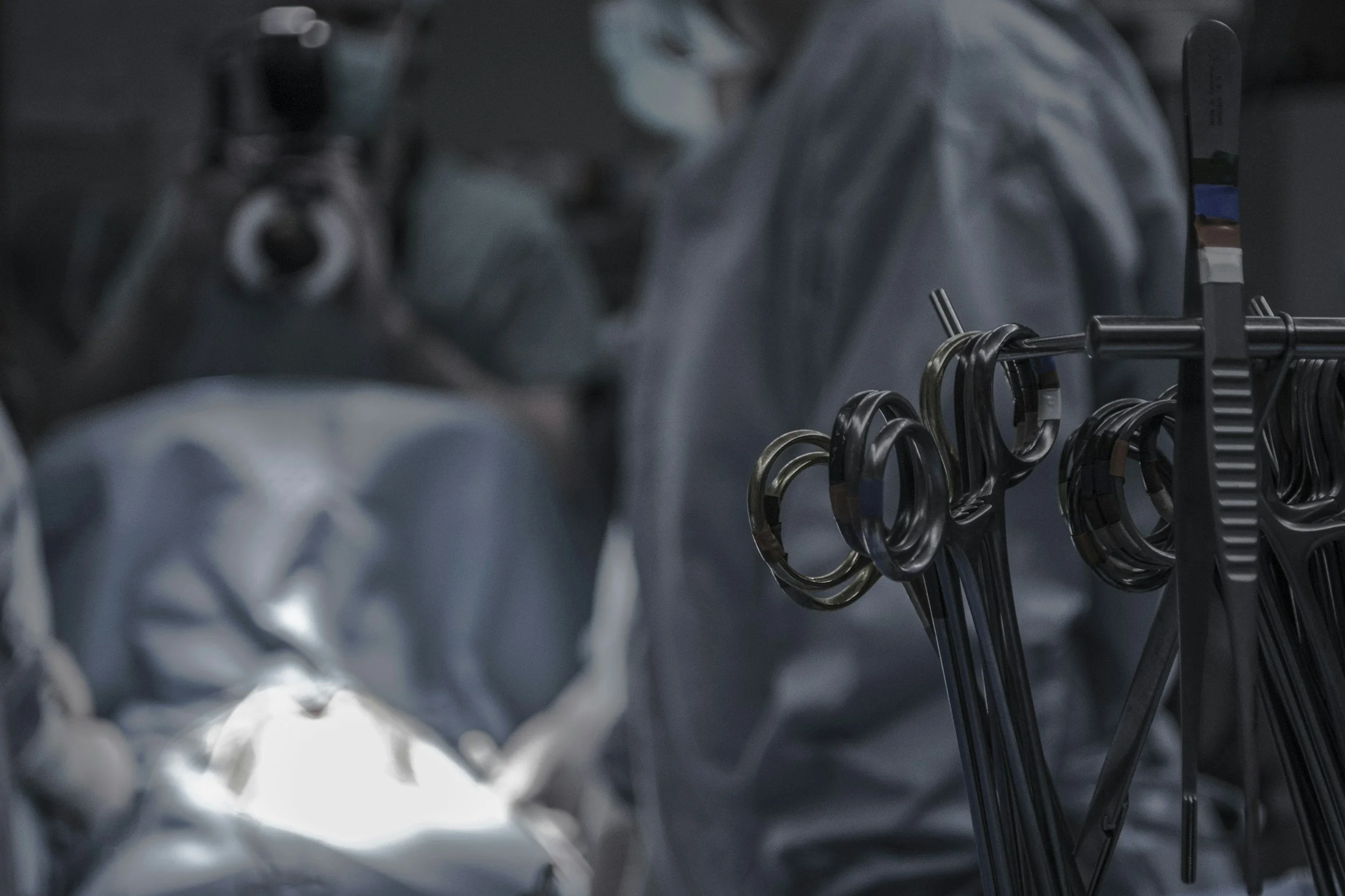
Dilation and Evacuation Abortion.
Abortion procedure performed from 16 to 24 weeks of pregnancy.
Dilation and Evacuation (D&E) abortions are usually performed from 16 to 24 weeks of pregnancy. It is performed over two days due to the extra time required for cervical dilation. It is the most common second-trimester abortion procedure, as opposed to saline abortions, which have a higher failure rate.
Day 1 - Dilation
At 16 weeks, the fetus is close to 5 ounces and 5 inches long (the size of a pear)[1]. Due to the larger fetal size, the cervix needs to begin dilating 24 to 48 hours in advance. This is done by inserting laminaria into the cervix the day before the abortion. Laminaria are small sticks made from dried kelp that absorb moisture and slowly expand. They are left in overnight.[2]
Day 2 - Evacuation Abortion
The procedure is performed while the patient is awake, with a local anesthetic injected into the cervix to reduce pain. Oral pain medication, anti-anxiety medication, or IV sedation may also be offered. The appointment lasts 4 to 5 hours if no complications occur. The procedure itself can take 20 to 30 minutes.[3]
The abortion procedure begins with more cervical dilation. Misoprostol is used to soften the cervix, and metal dilatators are used if needed. Once the cervix is adequately dilated, a surgical tube called a cannula is inserted into the uterus. This tube connects to a suction machine that is 4 times more powerful than your home vacuum. The vacuum sucks the amniotic fluid out of the uterus.[4]
After the amniotic fluid is removed, a grasping clamp similar to pliers is used to dismember and pull out pieces of the fetus from the uterus until a complete body can be assembled. At this stage of the pregnancy, the fetus is too large with bones too strong to be suctioned out.[5]
Lastly, a curette, which is a metal rod with a looped end, is inserted into the uterus. It is used to scrape the uterine walls and remove any tissue that remains from the pregnancy. Pregnancy tissue left in the uterus may lead to bleeding, infection and in severe cases, sepsis.
Post-Surgical Abortion
Mild to severe cramping may continue intermittently for up to 4 weeks as the uterus returns to its pre-pregnancy size. The intensity and duration can vary depending on how far along the pregnancy was.[6]
Patients are advised to monitor their symptoms and seek medical care if they experience fever, foul-smelling discharge, severe or worsening pain, or heavy bleeding (such as soaking through multiple pads per hour), as these may be signs of complications.[7]
Risks
This procedure carries significantly higher risks than other abortion procedures due to the longer gestation. At this stage of pregnancy, the placenta is tightly adherent to the uterine lining and removing it often requires considerable scraping. The risk of excessive bleeding as a result of the abortion increases. [8]
The risk of uterine perforation also increases.[9] Since the fetus is removed by dismemberment, sharp pieces of broken fetal bones can puncture or tear the uterus. This can also damage the bowel, bladder, rectum and other maternal organs.
There is also a higher risk of cervical damage and scarred tissue, which may result in future pregnancy complications, such as miscarriage and preterm births.[10]
See our Abortion Risks page for further information on the side effects of the D&E abortion procedure.
(It is strongly recommended that the patient understands all available options before making an irreversible medical decision. Please contact us if you would like more information on your pregnancy options and available support.)
[1]Zapata, K. (2025, July 17). How big is your baby? A week‑by‑week guide for expecting parents. Parents.https://www.parents.com/pregnancy/week-by-week/how-big-is-your-baby-this-week/
[2] Kim, L. (2024, July 12). What is a D&E procedure? Advance Study.https://advancestudy.org/what-is-a-de-procedure/ (advancestudy.org)
[3]What is a D&E procedure? Advance Study.
[4]Edelman, A., & Kapp, N. (2018). Dilatation & evacuation (D&E) reference guide: Induced abortion and postabortion care at or after 13 weeks gestation (‘second trimester’). Ipas.https://www.ipas.org/wp-content/uploads/2020/06/DESTRE18-DilationEvacuationReferenceGuide.pdf (ipas.org)
[5]Live Action. (n.d.). What is abortion?https://www.liveaction.org/what-is-abortion
[6]Pro Femina. (n.d.). Dilation and evacuation (D&E).https://www.profemina.org/en-us/abortion/dilation-and-evacuation
[7]Healthline. (n.d.). Surgical abortion: What it is and what to expect.https://www.healthline.com/health/surgical-abortion#potential-risks
[8]Live Action. What is abortion?
[9]Sajadi-Ernazarova, K. R., & Martinez, C. L. (2021). Abortion complications. StatPearls Publishing.https://www.ncbi.nlm.nih.gov/books/NBK430793/
[10]Niinimäki, M., Pouta, A., Bloigu, A., Gissler, M., Hemminki, E., Suhonen, S., & Heikinheimo, O. (2009). Immediate complications after medical compared with surgical termination of pregnancy. Obstetrics & Gynecology, 114(4), 795–804.https://pubmed.ncbi.nlm.nih.gov/19888037/